Thursday, December 9, 2010

Stanley ong tze kiat 0905905F


Disneyization of Japan
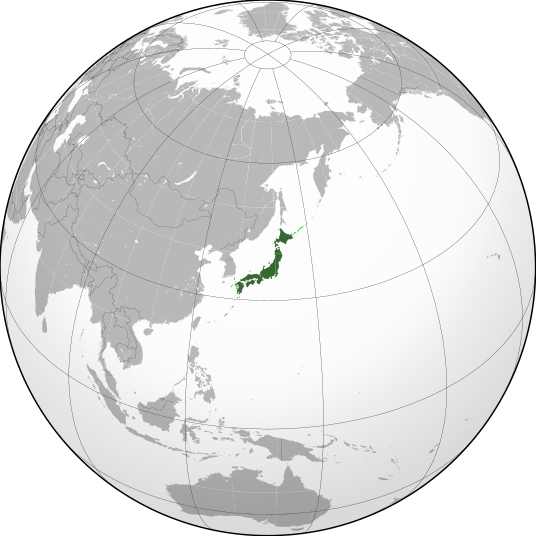


Overview of Japan
Japan is an island nation located in East Asia, and off the Pacific Ocean.  Japan’s name in its native language, Japanese meant “sun origin”, this is due to its location which is due east to most of the countries in Asia. Hence Japan is often referred to as “the land of the rising sun”
Japan is an archipelago consisting of 6852 islands. 4 main islands which accounts for 97% of Japan’s total land area are Honshu, Hokkaido, Kyushu and Shikoku. Most of these islands are volcanic and one of its most famous landmarks is Mount Fuji, an active stratovolcano.
Japan’s is ranked 10th at the world’s largest population, with over 127million people.  Archaeological findings and research has shown that people had been living on the islands of Japan since the “late stone age” also known as the upper Paleolithic age, which is about 10000 to 40000 years ago. First written documents with mentions of Japan was in Chinese history texts from the first century AD. Due to its island natured location, long periods of isolations had shaped and characterized the current the historic Japan, influences from outside world had shaped the modern Japan.
Japan government has been established in 1947, its constitution is a unitary constitutional monarchy with emperor and a parliament called the diet, which is being elected by its citizens.
Japan is widely considered a major economic power; it has the world’s second largest economy by nominal GDP and the third largest in purchasing power parity. In addition it is the world’s fourth largest exporter and fifth largest importer. Estimates of its GDP at 2010 are rated at 4.267 Trillion USD and its GDP per capita is rated at 41366 USD. Due to its high GDP and economical powers, most Japanese enjoy high standards of living with high level of income, integrated and advanced medical facilities and advanced educations. Its national human development index ( HDI) is rated at 0.884 which is the 11th highest in the world, this indicates that Japanese is rated highly at the following component; Literacy rate, GDP per capita, Life span, by the 3 different index, the income index, education index and life span index.

Cultures and Traditions
Since its original culture, the Jomon culture, in 14,000 BCE to 300 BCE, Japanese culture had evolved greatly over the years to its contemporary culture which shows and combines influences from other regions of the world, such as Asia, Europe and North America.
However Japanese still proudly uphold their traditional culture which includes arts, music, traditional clothing, architecture, cuisines and ceremonies. The evolution of Japanese culture can be clearly seen from its Manga which is a comic that has been created from the fusion of traditional woodblock printing and western arts. This led to the creation of Anime which is a creation of Japanese Manga influenced animation for television and films. Also this evolution can be seen from its music culture, Japanese music is a creation from different country which its burrowed instruments. Many instruments such as Koto were introduced in the early 14th century. Western classical music was later introduced in the late nineteenth century. Post war Japan had been significantly influenced by American and European contemporary and modern music which led to the evolution of J-pop.
However traditional cultures are still being strictly upheld in the contemporary Japan. One such example is the Japanese tea ceremony which is still practiced today. It is an tradition brought down from generation to generation. It involves the ceremonial preparation and presentation of powdered green tea, due to its presentation nature; it is viewed sometimes as performance art.


Indigenous people
The Ainu are the only indigenous people or group in Japan.  The Ainu people stayed and lived in Hokkaido, the Kuril Island and some parts of Sakhalin. A majority of Ainu people still live within the same region although the total population of Ainu remains unknown. Ainu people spoke in their native Ainu language and their related dialects. Because of intermarriages with Japanese, pure Ainu people are hard to find and because of ethnic issues in Japan, Ainu people had to hide their identities and thus caused confusion and the lost of the pure Ainu tribe.


Language of Japan

There is no official language in Japan however most of the Japanese speaks in Japanese and it is their national language, there is a variation of Japanese that is officially regionally recognized, and they include Aynu itak, Eastern Japanese, Western Japanese, Ryukyuan and other Japanese dialects. These different form of Japanese are also written in 3 different forms, known as their national scripts, they are Kanji, Hiragana and Katakana.


Education in Japan

Education is compulsory at primary and lower secondary levels. Although it is not compulsory for students to undergo education at any higher level than lower secondary, most students progress and promotes to the upper secondary level.  
At levels of lower secondary level and below, students attend public schools, but they can choose to go for private education when they have reached the upper secondary level, which has become increasingly popular amongst Japan.
Students undergo 3 years of education at lower secondary and 6 years of education at primary level, prior to that, education is available at kindergartens and day care centers. The education system in Japan is very similar to that of Singapore. Japan’s advanced education system had played a major role in the economic recovery and growth of Japan since World War 2, its advanced educational system has landed Japan in the 4th place in the international educational scores for 8th grade.


Leisure, festivals, events, sports,

There are many forms of leisure in Japan, and one of the most popular is sports. Spectator sports such as Sumo and Baseball is a very popular form of leisure and recreational activity in Japan. New sports such as football and golf are also gaining popularity in Japan. Since its establishment in 1992, the Japan professional Football league has gained popularity and spectatorship. A study have shown that baseball is the most popular sport in Japan with its spectatorship exceeded well over 51.7% in 2007 compare to the rest of the spectator sports in Japan. Football is ranked second at 22.8%, Sumo is third at 18.3% and Golf is fourth at 14.4%

.


What is the country known for?

Japan is known for a wide array of things, ranging from its heritage and culture, to its advanced technologies. Japanese is known for their well cultured nature and their traditions that had been closely upheld from generations to generations. Japan is also known for its advancements and break through in science and technology, Japan being the leading producer or robots stands as a testament to its advancement in technology and machinery.


Japan and its Disneyfication.

Disneyfication, is a recently created term use to describe the transformation of something. Usually its used to describe the transformation of a society to the themes and cultures of Walt disney’s theme parks. In general, this transformation carries with it negative views, such as the homogenization of merchandising and causing the place where disneyfication is occurring to lose its originality. Disneyization is seen as a globalizing force which spreads the principles associated with Disney theme parks around the world.
Japan is known to many as the land of the rising sun. Cultures and traditions that are deeply upheld by Japanese and traditional buildings and artifacts are well preserved. However through the recent years, Globalization has brought in many western and European cultures to the land of the rising sun, causing its cultural roots to be shaken and their cultural values to be diluted, examples are the introduction of pop culture and fast foods.  Through the Globalizing phases of Japan, signs of diseyization has been observed in different areas of Japan. The example that I would be using to illustrate disneyization is the Tokyo tower.
Theming  is the process of creating a holistic and integrated consumer venue. Theming is applied to themed spaces which may include theme parks, restaurants, resorts and other spaces. Theming can give the themed product additional value as it is a process of differentiating the product which adds a unique selling point to the product.
Theming has resulted the change in consumer’s perception to be digressed away from the true and actual significance of the attraction. For example the Tokyo tower in Japan, the original significance of the attraction is it being the second highest artificial structure in Japan which provides observatory recreation and it is the main communication tower in Tokyo. Tokyo tower’s staffs are dressed in a distinct uniform to showcase their specific ‘Tokyo tower theme’. Also mascots are dressed in the distinct logo of the Tokyo towers, merchandises sold also comes in shapes and forms that represents the mascots and logo of Tokyo tower.


Hybrid consumption
Hybrid consumption is defined as a general trend whereby the forms of consumption from different aspects have become interlocked and interlinked with each other. Tokyo tower has integrated itself from being just an observatory tower to a integrated tourism attraction that features malls, restaurants, arcades and children playpens. Consumption from different areas and aspects of the Tokyo towers has become interlinked to promote Tokyo tower as a tourists attraction as a whole.


Merchandising
Merchandising is defined as the promotion and sales of goods using copyrights, logos and images. Merchandising can be observed in the Tokyo tower’s gifts and souvenir store which sells key chains, magnets  and many other merchandises with images or logo of the Tokyo tower being imprinted on it, some merchandise such as key chains comes shaped in resemblance to the original Tokyo tower.


Performative labour
Performative labour refers to the tendency for management to deliberately set frontline service staff to be viewed as a performance; one of the best examples is Mascots. Performative Labour can be seen in Tokyo tower’s mascots. These mascots serve as a tourists guide and have become a performance and an attraction itself.


In conclusion, disneyization can be seen in the Tokyo tower, and it has helped boost the tourism revenue generated as it had helped to market Tokyo tower as a tourist’s attraction. However it has greatly shaped the perspective of prospective tourists, most tourists would visit Tokyo tower due to its integrated facilities in addition to its original significance being the largest communication tower in Tokyo area. Motivation to visit the Tokyo tower for observatory now stands a smaller percentage after dyneyization has taken place in Tokyo tower. Disneyization would not be possible if its not for globalization. Globalization has brought across this spread of idea and culture from one place to another, and disneyization's concept was thus spread across the globe from USA to Japan due to globalization.


References:

http://www.canyons.edu/Faculty/haugent
 /Disneyization%20of%20Society%20Article.pdf

http://www.tokyotower.co.jp/english/

http://fasnafan.tripod.com/disneyization.pdf


http://www.canyons.edu/Faculty/haugent/Disneyization%20of%20Society%20Article.pdf


http://en.wikipedia.org/wiki/Japan